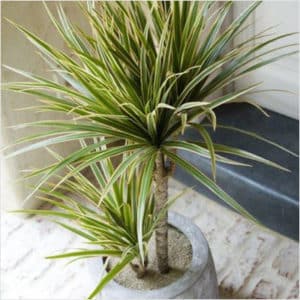
Here are some of the most durable indoor plants.
Dracaena marginata
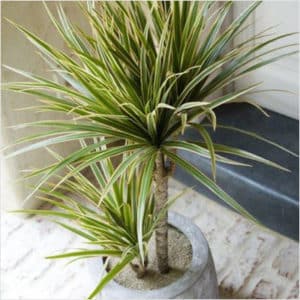 This plant is one of the most common in our homes. Native to Madagascar, it is also called the Tronchetto della Happiness.
It does not require much care as it easily adapts to various places in the house. It prefers sunny environments, but not areas directly exposed to sunlight.
When the old leaves at the bottom dry out, they periodically fall off by themselves.
Perfect as an indoor plant, as it is very resistant to various temperatures, but above all, it does not need much care.
A beautiful and very resilient plant, Dracaena marginata is ideal for those who want a hardy, non-bulky plant at home. Very delicate and pleasing to the eye.
Ficus Benjamin
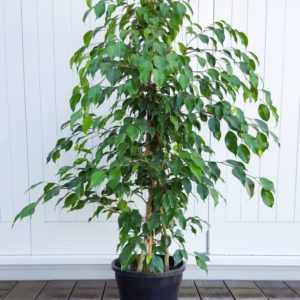 It is the most common and widespread plant among Italian households. It is a species mainly for apartments, but in nature, it reaches very high heights.
It does not require much care; it needs light but not direct light. It is recommended to water it periodically, as well as fertilization, preferably twice a month.
Pruning should only be done to remove dry branches or to slightly reduce height. When we notice that the roots are escaping from the pot, it is recommended to repot the plant into a larger pot and remove the protruding roots.
It may happen that the plant loses its leaves; this does not mean it is dry, but it is simply sensitive to a new climate, so after a few days, it will produce new green leaves.
Its strong adaptability to dry environments makes it a very resilient plant even in areas of the house that are not particularly sunny.
Devil’s Ivy or Pothos
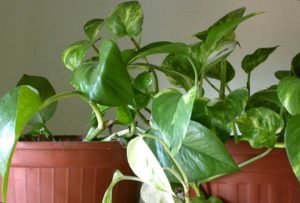 A very common plant, especially because it is very inexpensive and very simple to keep indoors. It is a climbing plant that, in nature, reaches very high heights, in fact, it climbs trees, while in our homes, it reaches very small dimensions. It requires good light exposure, but not direct sunlight. It also needs proper watering; otherwise, the plant will rot.
For propagation, simply cut a branch and place it in a glass of water; it will develop new roots in a short time, then it can be transplanted into a pot with potting soil. Pothos is also one of the few plants that has the ability to clean the air in the home. Due to these characteristics, it easily adapts to indoor environments, requires little maintenance, and has good growth and resistance to diseases.
Sansevieria or Mother-in-Law’s Tongue
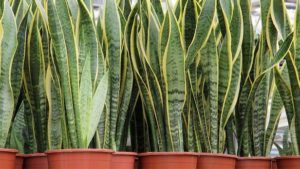 A plant native to tropical areas, it grows in places with different climates, so it easily adapts to any temperature in the house. It has long sword-shaped leaves that grow directly from the ground and can reach maximum heights of 1 meter. Its unique leaves of different colors are one of the reasons it is cultivated for indoor use. In some regions of Mexico, it also grows spontaneously.
It does not like very low temperatures; for this reason, apartments are ideal for this plant. Being a succulent, it does not need much water. Mother-in-Law’s Tongue is also toxic to humans and animals, containing a substance used in shampoos. Due to its oily plant characteristics, Mother-in-Law’s Tongue can be safely kept in the house, precisely for the minimal care it requires. It is also not prone to pests, diseases, and does not need to be repotted.
Zamioculcas
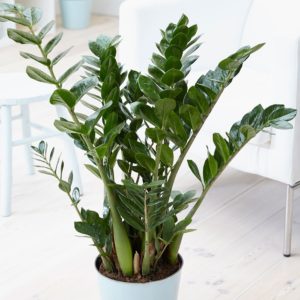 A plant native to Tanzania, Africa, it prefers warm places; in fact, it grows in very sunny spots. It is also called Gemma di Zanzibar, precisely because it grows on this island in Africa. The plant has very shiny lanceolate leaves and generally does not grow very tall. Ideal for apartments, it adapts to humid climates but not to cold climates. It loves sunny spots but is not oriented towards direct sunlight. It can withstand long periods without water; however, it is recommended to water it periodically without overdoing it.
A particular feature of this plant is its continuous budding of new stems. A recent study has shown that this plant can clean the air in indoor environments, eliminating some harmful substances, including benzene, xylene, and many others.
Used in different climates, this plant also adapts to different types of loam, so cultivating it indoors does not require extensive knowledge or care. If these few guidelines are followed, the plant will grow very quickly and always remain healthy.
Ficus Elastica or Rubber Tree
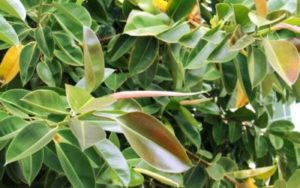 Also called the rubber tree because a substance that is used to create rubber comes from its leaves. It mainly grows in the tropical areas of America; in nature, it can reach heights of up to 30 meters, while in our homes, it can reach up to 2 meters. It has large bright green leaves, while the new leaves are reddish in color.
It prefers a warm climate but not directly exposed to sunlight; on the contrary, it does not like very low temperatures. If you do not want it to grow very tall, it is recommended to prune the plant at the right time.
Like other plants, it also helps purify the air in our homes, thanks to its ability to collect toxins and other harmful substances. Due to its resilience, it is suitable for those who do not want to spend much time taking care of plants; with minimal maintenance, it can last many years, considering its longevity.
Spathiphyllum or Spathiphyllus
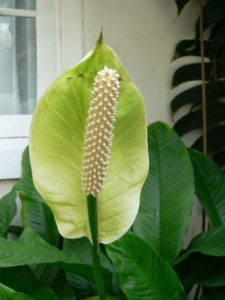 Originating from the tropical countries of Asia and America, the spathiphyllum, also called this way, has long leaves that grow directly from the base.
Very beautiful plant also because it has an inflorescence of white or greenish color.
It withstands rooms with little light; in fact, it can even be placed in a bathroom. The soil should be kept moist; moreover, it needs a warm and humid climate.
If well kept in these conditions, it produces beautiful flowers.
These characteristics lead this plant to be placed anywhere in our homes, also because it requires very little maintenance.
Recommended for anyone who wants a durable plant in the house, very beautiful to look at and eye-catching. It can be placed anywhere in the house to give a creative touch and a bit of greenery in the areas and rooms of your home.
Chlorophytum comosum also called Ribbon Plant
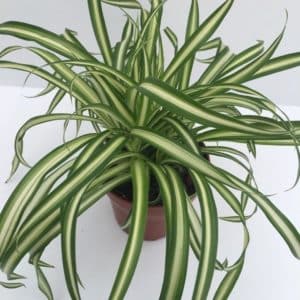 A pretty plant native to North Africa, it is also called ribbon due to its long leaves. Formed by a dense bush from which long striped leaves of green and white color grow.
During the flowering period, it produces long fleshy stems from which it emits small flowers and new seedlings. Due to this particularity, they are also suitable for hanging as hanging plants.
It prefers sunny areas but not direct sunlight.
In summer, it is recommended to water it more but always in moderation.
Easy growth and little maintenance make it a very durable plant for apartments. Its flowers, which in turn produce new seedlings on top, make it very simple for propagation.
Dieffenbachia
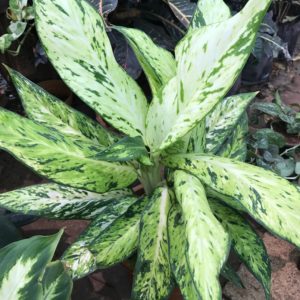 A house plant native to Central America and Asia, it is highly valued for its unique leaves; in fact, it has large dark green leaves with yellow or cream spots. Its strong stem can reach up to 2 meters in height. It prefers very bright spots but also adapts to poorly lit areas. It prefers to be watered abundantly, especially in summer.
Like other plants, it also has some toxicity, so if the leaves are ingested, it is likely to irritate the stomach, or it can irritate the mucous membranes, eyes, and mouth.
With very few simple steps to follow, this plant is very durable for living in a well-lit or poorly lit apartment.
Monstera Deliciosa
A climbing plant native to Guatemala and generally Central America, it mainly grows in tropical areas. Also called the American breadfruit plant, it grows to heights that can reach even 20 meters. It has large broad leaves of bright green color, and its long aerial roots allow it to attach to supports.
The plant gets its name from its fruit, resembling a hexagon-scaled ear, with a characteristic sweet taste. Usually, in an apartment, it does not produce fruit. It prefers medium to high temperatures and can even withstand below-zero temperatures.
Due to its resistance to pests, this plant is ideal for living in apartments. It can absorb up to 80% of harmful substances in the environment, and if well cared for, it can live up to 30 years.
Tag: Everything you need to know about climbing plants