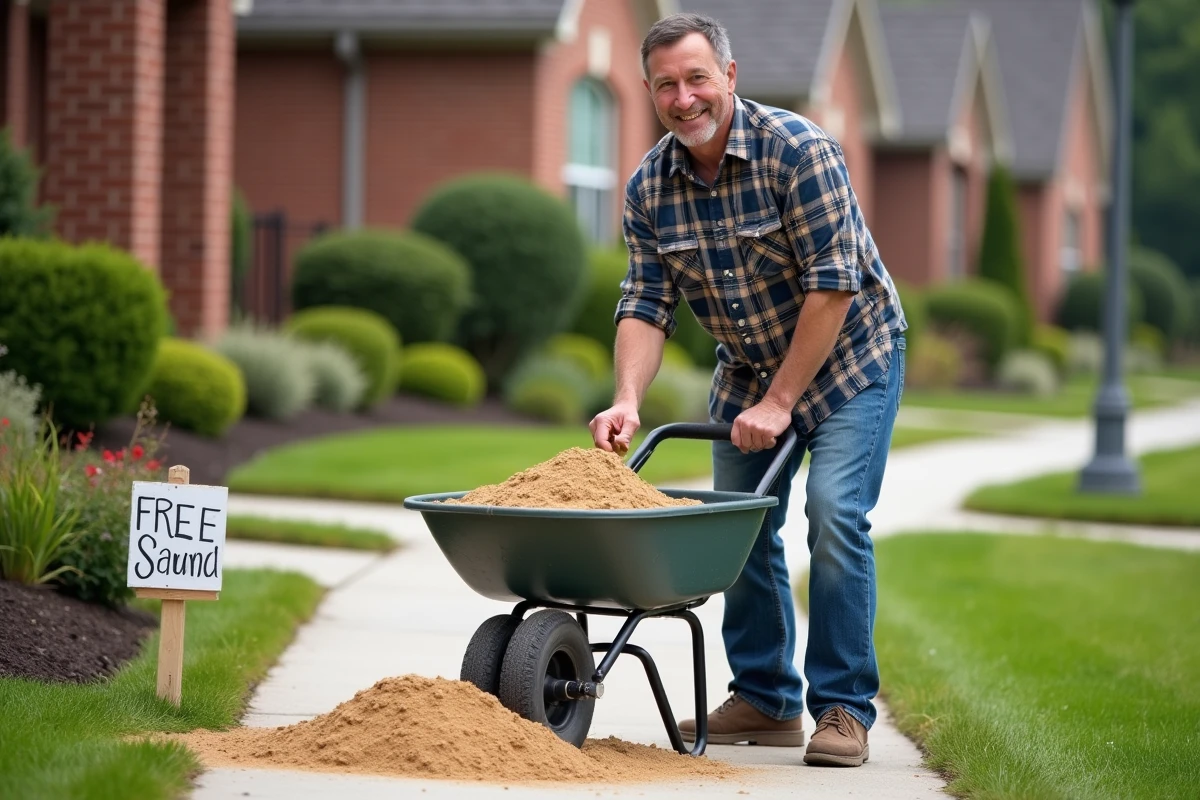
Some see sand as mundane dust, a waste to be disposed of. However, behind every road construction or excavation site, this material accumulates, ready to change hands if one is interested in its redistribution circuits. Public works often leave behind piles of unused sand, which municipalities sometimes agree to relinquish. If you have the eye and the right contact in the technical department, you can access these resources during occasional operations or by requesting available stocks after interventions. There are also material exchange platforms where sand, rubble, and other surpluses from private construction sites are regularly exchanged without financial compensation.
This sand, classified as a residue, finds its place in creating paths, stabilizing soils, or DIY projects. Before loading the trailer, make sure to check local regulations: some cities impose formalities or restrict free collection to avoid any wild recovery. Therefore, staying informed is the first step to avoid unpleasant surprises.
Where to find free sand for your gardening projects?
To get your hands on sand without spending, start by exploring your immediate surroundings. Municipal construction sites are often an underestimated source: ask your local technical department if there are any unused stocks available. Some town halls even organize days dedicated to material recovery, sometimes after road or street works. Waste disposal sites may also accept sand from small jobs, provided it is clean. Don’t hesitate to ask the person in charge on-site if collection is possible.
Collaborative platforms and local donation networks represent another goldmine. Regularly, individuals look to get rid of unused sand after an excavation or the contents of a sandbox that has become unnecessary. Check classified ads, join neighborhood groups or specialized forums: local mutual aid allows for the reuse of what would have gone to the dump, while easing the budget allocated to your landscaping.
However, be cautious about the quality of the sand offered. For your plantings and to respect the earth, prioritize clean sand, free of rubble or concrete residues. Depending on the source, consider sifting or rinsing it before any use to eliminate impurities.
For the more organized, it may be useful to compile a list of potential sources, comparing distance, logistical costs of transport, or grain size. There are plenty of options to obtain free sand for your garden. Each lead has its own set of advantages and constraints: it’s up to you to adjust according to your needs and the nature of your soil.
Creative ideas for using sand in your garden and DIY activities
Sand is not just for leveling heavy soils or improving drainage. Its uses go far beyond that and transform garden landscaping. It structures, outlines paths, delineates resting areas, or stabilizes supports. A simple bed of sand, well compacted, allows for the placement of wooden borders or slabs without the unwanted grass regrowing at the slightest rain.
- To define your vegetable garden, use a sand-gravel mix to draw clear lines and enhance each plot.
- Set up a garden lounge on a sand carpet: the surface remains pleasant, soft underfoot, and water drains naturally.
- Add sand to the soil of your flower beds to improve aeration and encourage plant rooting.
Here are some examples of uses that breathe new life into your outdoor space:
DIY enthusiasts are also rediscovering the potential of sand. Mixed with lime, it creates a mortar for building small walls or assembling natural stones. Its abrasive quality facilitates sanding wooden pieces, while the more creative use it as a base for sensory games or homemade decorative objects.
From the ground to the details, sand invites itself into every corner of the garden. It structures, enhances, repairs. From simple borders to terraces, it transforms the outdoor space into a playground for those who want to shape a vibrant, adaptable garden, and resolutely focused on the circular economy.
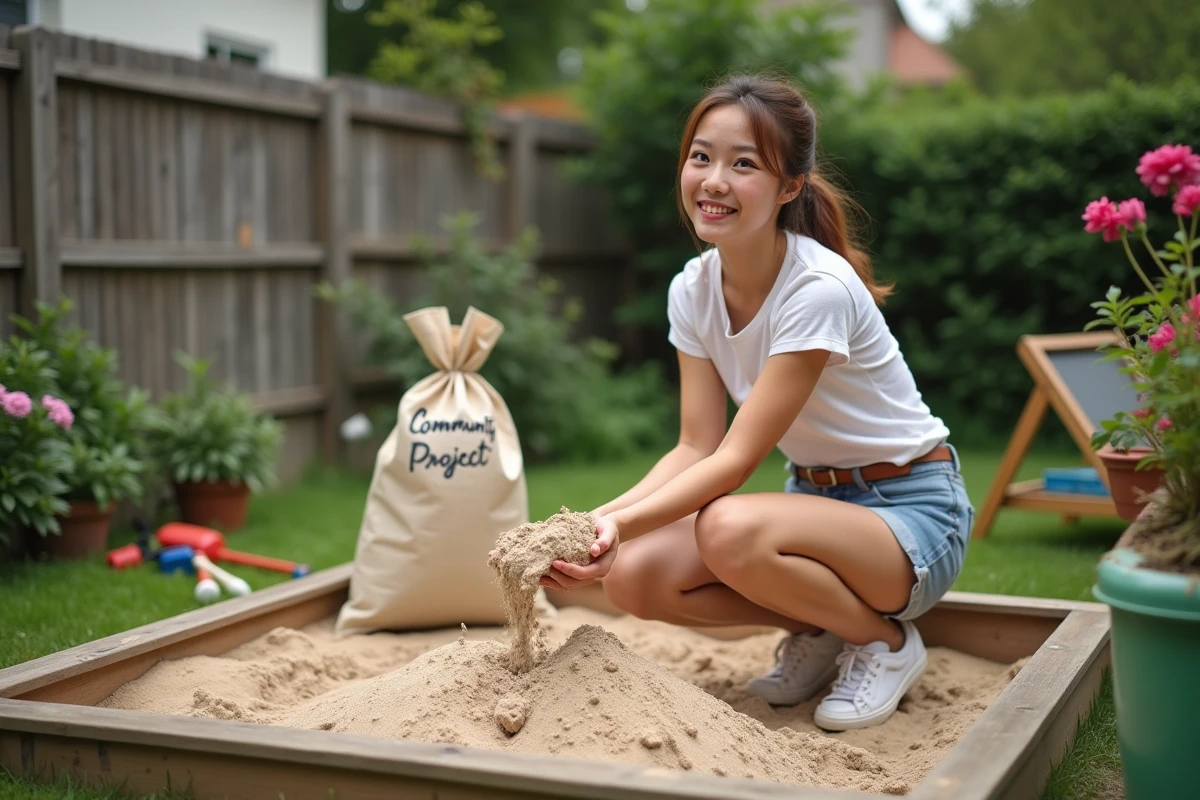
Small budgets: tips and alternatives for landscaping your outdoor space without breaking the bank
When finances are tight, ingenuity takes over. Free sand exists, but it is by multiplying local resources and recovered materials that one shapes an outdoor space at a lower cost. Collect every leftover from construction, abandoned sand after a delivery, or municipal excavation. Word of mouth also works: talk to your neighbors or scour specialized platforms for material donations, often rich in surprises.
To reduce the cost of your project, combine sand, gravel, and whatever you can gather. A stable path made with a gravel-sand mix reduces expenses while remaining aesthetic and durable. Other alternatives are worth considering, such as reclaimed bricks for borders, leftover wood to structure flower beds, or pebbles collected during walks to highlight the edges of a vegetable garden.
- Build borders using broken tiles or stones collected on-site.
- Create a modest relaxation area on a base of compacted sand: guaranteed vacation vibe without spending a fortune.
- Dare to use recycled materials to structure your garden, varying sand, wood, and rubble according to needs.
Here are some tips to make the most of what you have on hand:
A tight budget does not prevent boldness. The success of an outdoor layout depends as much on the ability to combine local resources and repurposed materials as on the amount of sand collected. Every act of recovery counts, every idea lowers the overall cost of the project. Sometimes, the real luxury is knowing how to transform what others leave behind.