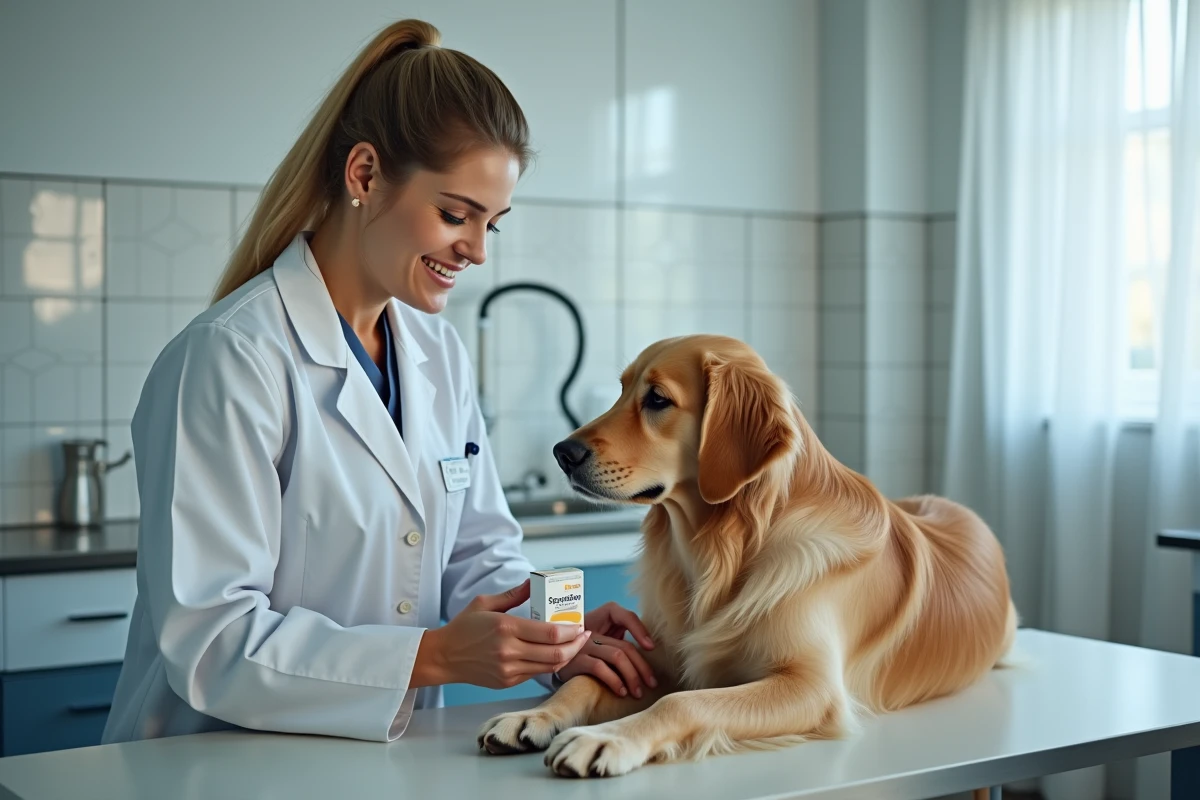
A pale orange tablet, known in medicine cabinets, diverted from its original use: Spasfon has no official approval for dogs in France. Yet, several veterinarians rely on it, exceptionally, and always with extreme caution. Behind this off-label use, each decision carries the weight of extreme vigilance: appropriate dosage, constant monitoring, no slackening when it comes to human medications for animals.
Spasfon for dogs: what to check before proceeding
Nothing is improvised here: even though Spasfon effectively relieves humans, its prescription for a dog remains subject to the careful analysis of the veterinarian. In the absence of a veterinary marketing authorization, only the clinical experience of the practitioner guides the course of action, on a case-by-case basis, after weighing each risk.
Before considering this treatment, wait for the diagnosis. Always specify everything to the veterinarian: your companion’s general condition, medical history, known sensitivities. Reactions to medications can differ from one dog to another. Where a human might experience simple stomach aches or rashes, a dog may sometimes react with vomiting, compulsive scratching, or sudden changes in behavior. In such cases, stop the intake immediately and seek advice.
Regarding the dosage of Spasfon for dogs, there is still some ambiguity. No standard scheme, no universal scale: the veterinarian’s judgment determines the dosage and the choice of form (tablet, injectable, lyoc), depending on what suits the dog and the situation. First administration? Observation is essential, adjustments are made in real-time.
What situations, what method: administering Spasfon to a dog safely
Prescribing Spasfon for dogs is neither random nor routine. The goal: to relieve spasmodic pain, almost always in the abdomen or bile ducts, under strict veterinary control. It all starts with the clinical examination: history, general condition, any other treatments, nothing is overlooked.
Indications and available forms: what to choose in practice?
The form of the medication depends on the dog’s condition. In an emergency, an injectable solution allows for rapid action, reserved for professionals, in a clinic. For a gentler treatment, tablets or Spasfon lyoc are preferred. The suppository route remains quite marginal and rarely suitable. The key molecules: phloroglucinol and phloroglucinol dihydrate.
Before each administration, remember these essential rules:
- Stick exactly to the prescribed interval between two administrations.
- Never alter the dose without the veterinarian’s consent.
- Immediately track any warning signs: vomiting, lethargic animal, behavioral issues.
The injectable solution should only be used by experienced hands. Outside of an emergency, the tablet or lyoc version will remain the veterinarian’s choice. Sometimes, administering on an empty stomach enhances the effect, but again, follow the instructions received precisely. Avoid any solo attempts: each organism reacts differently, and no risk is acceptable.
Nothing equals regular communication with your veterinarian. Review the leaflet, follow every instruction, ask your questions. This rigor ensures maximum benefit without multiplying dangers.

Unexpected effects, precautions, and alternatives: Spasfon and risks
Using a medication designed for humans in dogs requires constant vigilance. The leaflet only details side effects observed in humans, and there is little data for our companions. Some dogs tolerate phloroglucinol without difficulty. Others cannot handle it: vomiting, digestive sluggishness, lethargy. Be particularly attentive after the first dose, as it is during the initial hours that unpleasant surprises may arise.
Precautions to implement
To secure the use, always keep these checks in mind:
- Never give Spasfon without veterinary approval.
- If your pet is already undergoing treatment or has a medical condition, it is up to the professional to decide.
- Read every line of the packaging and carefully check the marketing authorization on the box.
Not all abdominal pains have the same cause or consequences. For the digestive system or bile ducts, the priority remains the absence of hidden drug interactions. Specific pathologies, such as kidney colic or urinary complications, require tailored solutions, never improvisation.
In the face of temporary pain, some practitioners prefer to rely on natural alternatives (dietary adjustments, phytotherapeutic solutions…). Ask your veterinarian if other options exist for your dog, especially in case of previous issues.
Ultimately, every hesitation always justifies a call to the veterinarian before any initiative. Better to lose five minutes than a health, and turning a concern into a reliable solution never harms anyone.