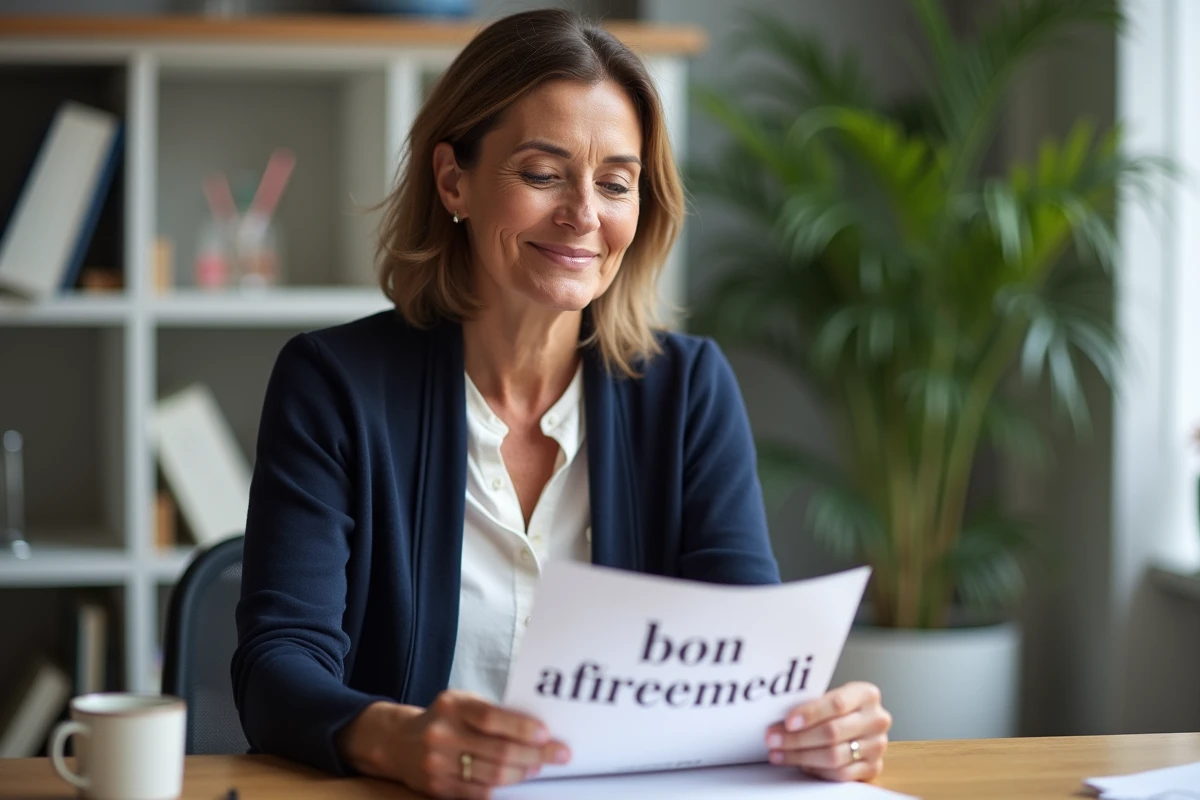
To say “good afternoon” is not included in any official list of greetings stamped by the Académie française. However, the expression has settled into our exchanges, never quite deciding on the gender. Depending on the region, context, or interlocutor, some prefer it masculine, others feminine, and usage still hesitates to unify.
In writing, the rules remain fluid. In speech, simplicity often prevails, with each person opting for the formula that seems most natural to them. Linguistic experts do not agree either, which only fuels the ambiguity in our everyday conversations.
Why does the gender of “good afternoon” raise so many questions?
It’s impossible to mention “afternoon” without highlighting the paradox it embodies. This word, one of the few that can be either masculine or feminine, disrupts our benchmarks: the majority of French nouns require a specific gender, but “afternoon” escapes the rule. On one hand, “noon” is masculine and might seem to impose its mark. On the other hand, due to its proximity to “morning” or “evening,” the feminine naturally invites itself into certain usages.
This dual identity is not recent. Literature has long embraced it, Quebec has made it a habit, while in metropolitan France, the masculine dominates in the press or administration. This back-and-forth, far from being purely theoretical, feeds the following question: masculine or feminine for good afternoon?
The uniqueness of “afternoon” stands out in a language that rarely tolerates a word playing on both sides. The debates become even more heated when comparing it to the clarity of “morning/morning” or “evening/evening.” Implicitly, the function of the word influences the choice: one is more likely to choose the masculine to denote the moment, the feminine to evoke the duration.
The gender of “afternoon” embodies those questions that the French language cherishes: it does not decide, but it does not erase the question either. It leaves the door open, maintained by the variety of situations, usages, and the inventiveness of its speakers.
Masculine or feminine: what grammar and usage say
The Académie française relies on etymology and recommends the masculine for “afternoon,” a direct descendant of “noon.” In official texts, administrative correspondence, or the press in France and Belgium, the preference is clear for “a good afternoon.” But grammar does not impose anything authoritatively: it proposes, it suggests, it allows usage to breathe.
In literature, there are no constraints. “A beautiful afternoon” traverses novels and poems, carried by the feminine kinship of “morning” or “evening.” In Quebec and in some more familiar contexts, the feminine asserts itself without complex, often passed down from generation to generation. Usage adapts to regional particularities, to the private sphere, far from the academic gaze.
Behind this fluidity lies a logic. Using the feminine often emphasizes the duration (“a long afternoon”), while the masculine focuses on the precise moment. But “afternoon” remains one of those rare epicene words in the French language, allowed to navigate between two genders.
To clarify, here are some guidelines on common usages:
- In the majority of administrative documents, “afternoon” takes the masculine.
- The feminine resonates in literature, in Quebec, and in informal conversations.
- Since the 1990 reform, “afternoons” is accepted in the plural, in addition to the invariable “afternoon.”
Social evolutions and the feminization of nouns are gradually influencing these choices. Ultimately, the most prudent approach is consistency: choose a gender and stick to it throughout the text, both for adjectives and for the clarity of your sentences. Both options are valid, but consistency avoids any ambiguity.

Practical tips to stop hesitating both orally and in writing
The gender of “afternoon” confuses even experts. Grammarians, teachers, writers: all recognize that both agreements are possible. To decide, rely on the logic of agreement. In speech as in writing, the adjective must follow the chosen gender: “a good afternoon” or “a beautiful afternoon.”
In administration and official writings, the masculine predominates. Literature, Quebec, or personal correspondence often favor the feminine. This flexibility also extends to dictionaries, which validate both forms. Adapt to the context: reserve the masculine for formal situations, prefer the feminine in a narrative or a less structured letter.
Keep a guiding line: avoid alternating between masculine and feminine for “afternoon” in the same document. A simple check of the agreement with the adjective will help you in case of hesitation. Automatic correctors accept both, as long as the choice remains stable.
To illustrate these recommendations, here are some formulations suited to different contexts:
- In an official letter: “We wish you an excellent afternoon.”
- On a card or in a notebook: “What a lovely afternoon spent by the river!”
Ultimately, usage is shaped by the situation, intention, and sensitivity of each individual. The French language grants this freedom: it is up to each person to seize it, without getting lost, but with a discreet precision in agreement. The essential thing is that your “afternoon,” whatever its grammatical color, finds its natural place in your words.