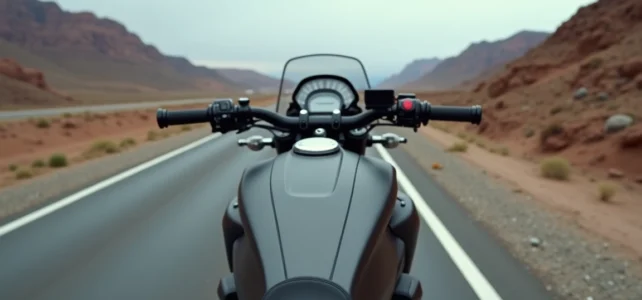
The fuel tank capacity of a motorcycle directly determines the distance traveled between two stops at the pump. On a journey of several hundred kilometers, the difference between a fifteen-liter tank and a twenty-five-liter tank can sometimes represent a whole leg less. Motorcycles designed to cover long distances incorporate this data from the design stage, but the size of the tank only tells part of the story.
To effectively compare models, one must cross-reference capacity with actual consumption. A generous tank paired with a thirsty engine does not guarantee a range superior to that of a frugal trail bike equipped with a more modest tank. It is this ratio of liters carried to liters consumed that makes the real difference on the road.
Motorcycle tank: gross capacity versus actual range
Many rankings align models by tank size without mentioning consumption. A thirty-liter tank on a touring bike that consumes seven liters per hundred kilometers offers barely over four hundred kilometers of range. The same volume on a frugal trail bike at four liters per hundred pushes the limit well beyond seven hundred kilometers.
The Motoplanete ranking illustrates this discrepancy: the Mash X-Ride 50, with its consumption barely exceeding one liter per hundred, displays a calculated range of over 950 kilometers, despite its minuscule engine size. In contrast, some powerful GTs rarely exceed 350 kilometers despite a comfortable tank.
Range depends on the capacity/consumption ratio, not just the tank alone. Before choosing a model for long trips, it is better to consult the cross-referenced data. You can discover the motorcycle tank capacity model by model to compare on a reliable basis.
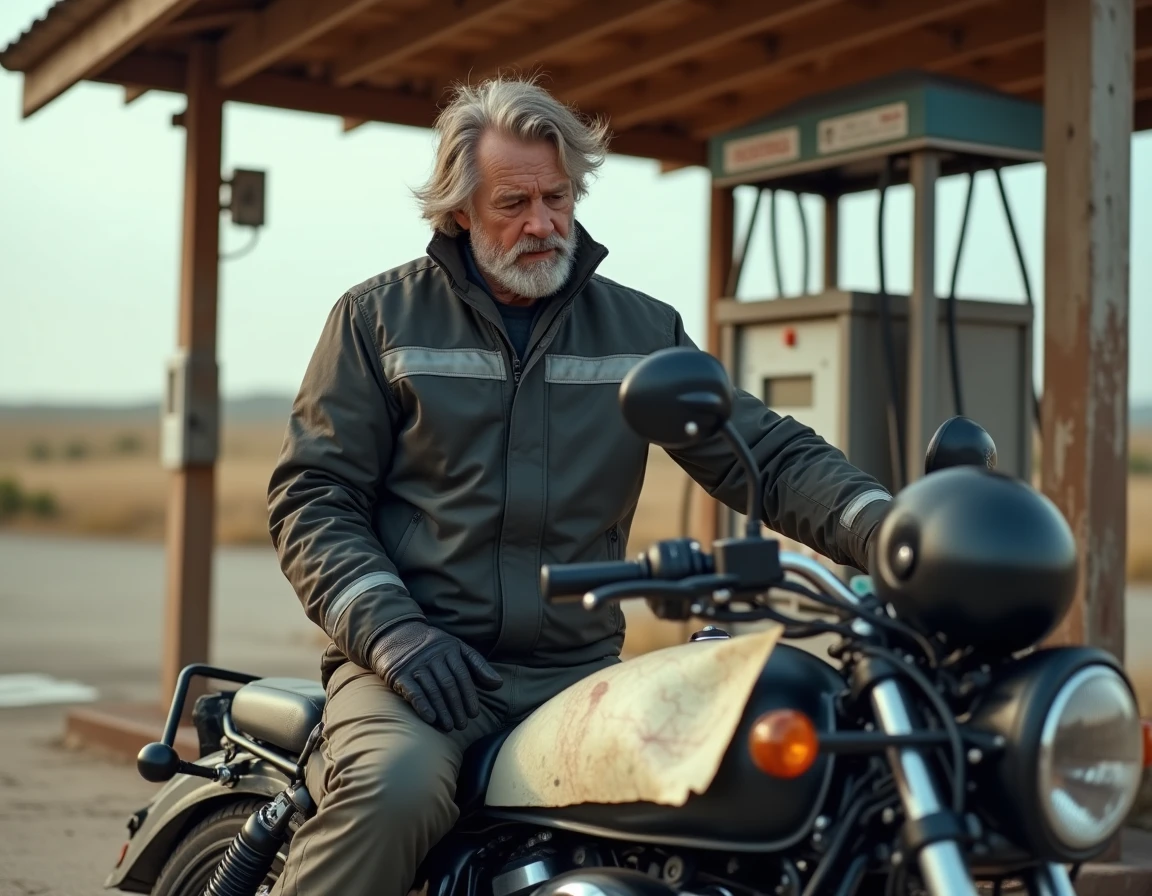
Dual tank and weight distribution on long-distance trails
Manufacturers no longer just enlarge a single plastic tank under the seat. The Yamaha Ténéré 700 World Raid comes standard with a dual tank totaling 23 liters, distributed on either side of the frame. This architecture changes the game on two fronts.
The first is stability. A single tank placed high and forward shifts the center of gravity upward as it empties asymmetrically. With two tanks positioned low and symmetrically, the center of gravity remains stable regardless of the fuel level.
The second concerns off-road behavior. On track or on rough paths, a better-distributed mass reduces the pendulum effect. The motorcycle remains more predictable in ruts and technical passages, even when loaded with luggage.
Who offers this system as standard
The Ténéré 700 World Raid remains the most accessible reference with this type of design. Other manufacturers are exploring similar solutions on rally-raid oriented models, but few production motorcycles adopt the dual tank. This is a criterion to check if the journey mixes asphalt and unpaved tracks.
Accessory solutions: oversized tanks and additional fuel cans
Extreme range is no longer reserved for large GTs or high-end trails. Suppliers like Acerbis now manufacture replacement tanks with spectacular dimensions, including for small-displacement bikes.
The most striking example: an Acerbis tank of 108 liters approved for a Honda Monkey 125. The project aimed to connect Italy to the North Cape on a single tank of fuel. On a motorcycle whose original tank holds barely a few liters, the contrast is striking. This type of setup remains exceptional, but it shows that the limit of range is shifting towards accessories rather than the original model.
Cans and tank bags for road trips
For travelers who do not want to modify their motorcycle deeply, tank bags also serve as secure support for additional fuel cans. Feedback from several years and thousands of kilometers confirms the reliability of this approach, provided a few rules are followed:
- Use approved cans for transporting fuel, never food containers or repurposed ones
- Securely fasten the can in the bag to prevent any movement while riding, especially on tracks
- Limit the additional volume to what the bag can support without destabilizing the steering
- Check thermal compatibility: the can should not be directly exposed to the engine or exhaust
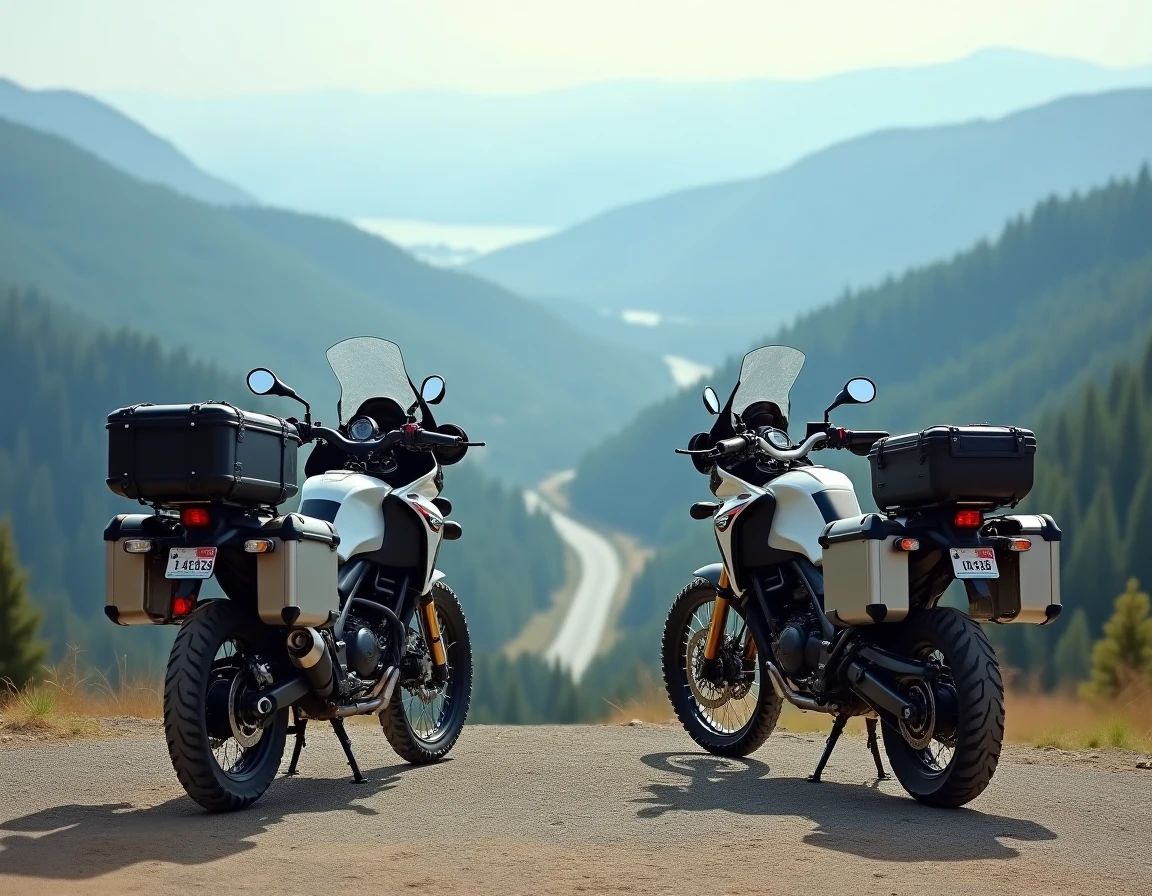
Touring and GT motorcycles with large tanks: standout models
In the segment of motorcycles designed for the road, a few families stand out for their ability to cover stages without refueling stops.
GT touring bikes like the BMW R 1250 RT or the Honda Gold Wing combine generous tanks with an engine optimized for cruising speed. Their consumption remains contained despite a high weight and comfort features (heated seat, electronic suspensions, adjustable windscreen). The range often exceeds 400 kilometers in real usage.
Sport-GT models like the Yamaha Tracer 9 GT or the Suzuki GSX-S1000GT aim for a compromise between dynamism and endurance. Their tank is slightly smaller than that of pure GTs, but their moderate consumption partially compensates.
- The BMW R 1250 RT: Boxer engine, long-distance comfort, tank among the largest in the GT segment
- The Honda Gold Wing: reference in comfort, comfortable range thanks to an economical engine for its displacement
- The Yamaha Tracer 9 GT: versatile, lighter than classic GTs, with contained consumption
- The Suzuki GSX-S1000GT: aggressive pricing, good tank/consumption compromise
The choice depends on the type of trip planned. A heavy GT excels on highways and main roads but loses its advantage on winding roads or tracks where a frugal trail bike with a dual tank will be more comfortable.
What matters beyond the tank
The size of the tank guides the choice, but other factors weigh on actual range during travel. Riding style significantly alters consumption: a consistently high engine speed can add one to two liters per hundred. The load (luggage, passenger) also increases consumption.
Tires play a role that is often underestimated. A trail tire with knobs consumes more than a smooth road tire, sometimes noticeably over long distances. Adapting the tire to the intended terrain directly improves range.
The motorcycle with the largest tank is not necessarily the one that will go the farthest. It is the one whose overall (engine, aerodynamics, weight, tank) forms the best compromise for the planned journey.